

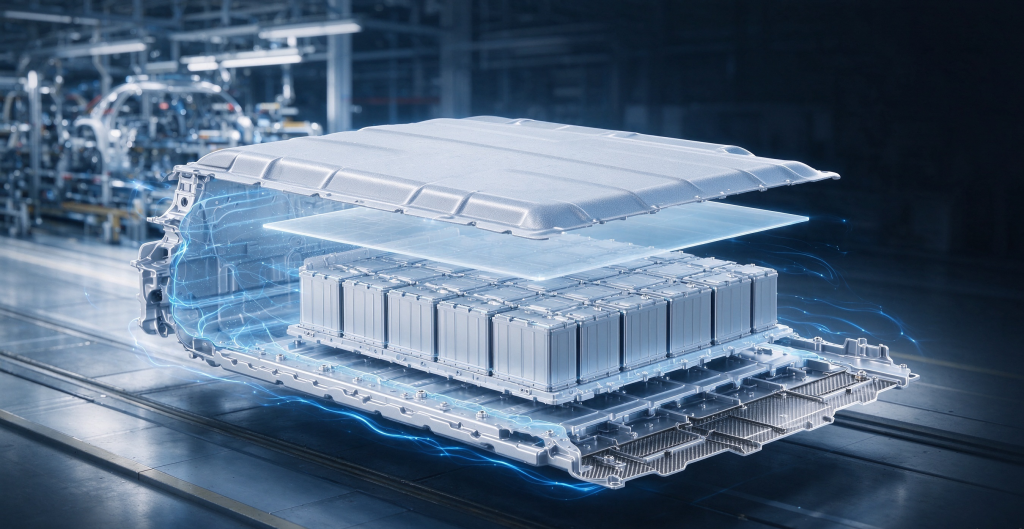
A tier-one EV supplier needed a lighter battery enclosure that still met IP67 sealing and module-bonding flatness requirements. This case covers the sheet metal process changes that took the part from prototype to 2,000 units per month.
Project Background
The enclosure was fabricated from 6061-T6 aluminum sheet, 1.5 mm walls with a 3.0 mm mounting flange, measuring 1,200 × 800 × 300 mm. The housing carries 96 prismatic cells and must hold flatness across the module-bonding surface while keeping the sealing groove within ±0.15 mm. Annual volume was set at 24,000 units, split into monthly batches of 2,000.
The Engineering Challenge
Welding the flange to the thin side walls introduced distortion that pushed flatness beyond 1.2 mm per meter — three times the 0.4 mm allowance. The sealing groove also drifted after welding, causing leak-test failures at the prototype stage. Burrs from laser cutting interfered with gasket seating, and powder coating build-up in the groove reduced compression by up to 15%.
We re-sequenced the process: laser cutting with nitrogen assist to control the heat-affected zone, fixture-based TIG welding with copper heat sinks, stress-relief before final machining of the groove, and masking plugs during coating.
Impact and Results
Flatness settled at 0.3 mm per meter, leak testing passed IP67 at 100% inspection, and housing weight dropped 18% versus the previous steel design. Scrap fell from 8.1% to 1.2%, and the customer consolidated three suppliers into one.